“The music is not in the notes, but in the silence between.”
Claude Debussy
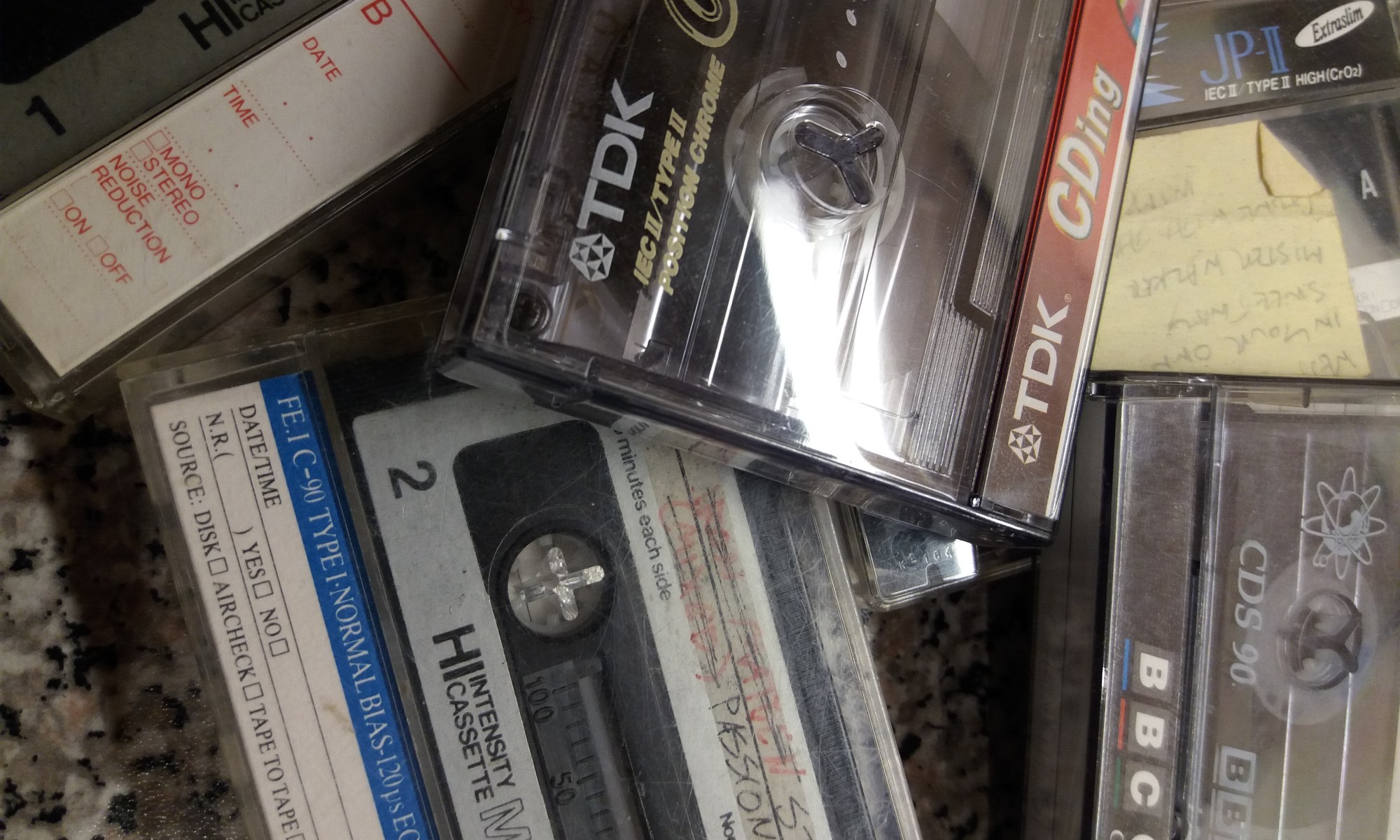
As a teenager I used to buy all my music on cassette tape, partly because they were much cheaper than CDs but also because they were small and portable, meaning I could listen to them in my mum’s car or easily take them to my friend’s house. There were also other benefits to cassettes which were less obvious at the time, but are now clearer with hindsight.
Firstly, songs on cassettes were not easily skippable. This meant I would usually listen to a whole album from start to finish (with the occasional rewind to repeat an epic guitar solo) and even the songs I didn’t initially like would work their way into my playlist until they became favourites. These days I hardly ever listen to a whole song, let alone a whole album, and this song-hopping seems to be encouraged by services like Spotify, whether intentionally or not.
More importantly, I never listen to the silence between the songs any more. That little space gave me some breathing room to digest what I had just heard, and sometimes that space was playfully manipulated by the artist: Def Leppard’s ‘Animal’ has a false ending before the chorus comes back in a final time; Extreme’s song ‘Li’l Jack Horny’ gradually fades out, but then fades back in before coming to a definite end. If you listen to ‘Never Ending Story’ by Giorgio Moroder, you can hear it starts with a fade-in and ends with a fade-out, so the song really is never ending as it has no definite start or finish.
The space between songs has now been replaced by adverts, but that is the trade-off for listening to free music. Don’t get me wrong, I love being able to discover new music on digital platforms – I can’t tell you how much money I wasted as a kid on bad albums where the artist only had one good song. Being able to listen for free before I buy their work creates an incentive for the artist to give 100% effort into their output, rather than having an album of filler.
By listening to whole albums, I could appreciate the way the songs were ordered on the album. There was also thought given to the start and end of an album. For instance Steve Vai’s ‘Sex and Religion’ album starts with a piece called ‘An Earth Dweller’s Return‘. This music is then reprised when it fades in at the end of the final song ‘Rescue Me or Bury Me’, giving the whole album a ‘book end’ effect.
‘Sgt. Pepper’ by the Beatles was the first album to feature continuous music, using cross-fades to remove the silence between the songs. Albums such as Tubular Bells II by Mike Oldfield carried on this tradition and this approach doesn’t lessen each song. Oldfield gave great thought to determine whether a song abruptly switches into the next (‘Red Dawn’ into ‘The Bell’), or gently fades into the next (‘Sunjammer’ into ‘Red Dawn’), or gradually morphs into the next (‘Dark Star’ to ‘Clear Light’).
The silence between songs gives a resonance to the musical statement, a moment for our ears to hear total silence.
“…THE IDEAL WAY I’D HOPE A LISTENER EXPERIENCE MY MUSIC IS TO GRAB A GREAT SET OF HEADPHONES, SIT WITH THE VINYL, DROP THE NEEDLE, HOLD THE JACKET IN YOUR HANDS LOOKING AT THE ARTWORK (WITH YOUR FUCKING PHONE TURNED OFF) AND GO ON A JOURNEY WITH ME“
Trent Reznor
The resonance and reflection of silence is also applicable to our daily lives. Drinking a morning coffee in silence or quietly walking on our own creates moments of active silence, allowing us to appreciate music even more, as we get to temporarily experience the absence of music.
 Impact Guitar