
Why Creativity is Messy (And How You Can Master it!)

Photo by Free Creative Stuff on Pexels.com

We imagine a creative person as a messy genius, with paint splashed everywhere, dishevelled hair and wild emotions. But in reality, creative people are like two sides of a coin: willing to experience temporarily chaos, but only for a long term vision;ย  messy, but also very organised. After all, a painter needs to ensure their brushes are readily available when they need them.

The misconception comes from the initial spark of creativity, which often is messy, unpredictable and chaotic. Musicians, painters and writers learn to navigate their way through the first foggy stage by using their taste, instincts and experience until they have something that resembles their initial idea. The initial stage is like being a gardener – planting the seeds, waiting for them to grow and then nurturing them; falling in love with process. The second stage is more like being an architect, using logic, structure and order, and falling in love with the outcome.


I have a friend who is an astrophysicist and I often wish I could do the things he can do. Recently I was talking to him about my writing and he said, “I have no idea how you do that”. And that was when I realised that being creative is not something everyone feels comfortable with. Some people are more comfortable with numbers and a definite, concrete outcome. The messy initial stages of creativity are unbearable for some people, as they haven’t developed their internal compass to navigate through it. If you sit down to write a song, there are no guarantees or tangible truths to guide you there.

However intangible, creativity is also something that can be practised. There is no need to wait for “inspiration”, you only need to sit down and start. See what comes out. It may be mediocre, but that’s okay – just learn from it and know that the next thing you create will be a little bit better. You need to write 100 bad songs before you write your first good song. Before writing this post, I felt stuck and didn’t know what to write, so-called “writer’s block”. After much procrastination, I realised I just needed to write down the first few words and the rest would eventually come.

Creativity takes time, reflection and patience, but it is easy to lose these virtues with so many distractions readily available to absorb our senses. So whatever you want to create, just make a start right now, even if it is just the first twenty words of your novel, the first three chords of your song, or the initial pencil sketch for your oil painting. Make a start. And then do the same tomorrow.


My latest book “Guitar Gymnasium” is available on Amazon:

Not enough practise time? Try thisโ€ฆ

I hate the word โ€œmulti-taskingโ€ as it usually means doing two things poorly rather than one thing well. In my youth โ€“ when I had no responsibilities –  I would practise in a very focused manner; if I wanted to improve my alternate picking, I would practise something like this:

Likewise, if I wanted to practise legato, I would do this:

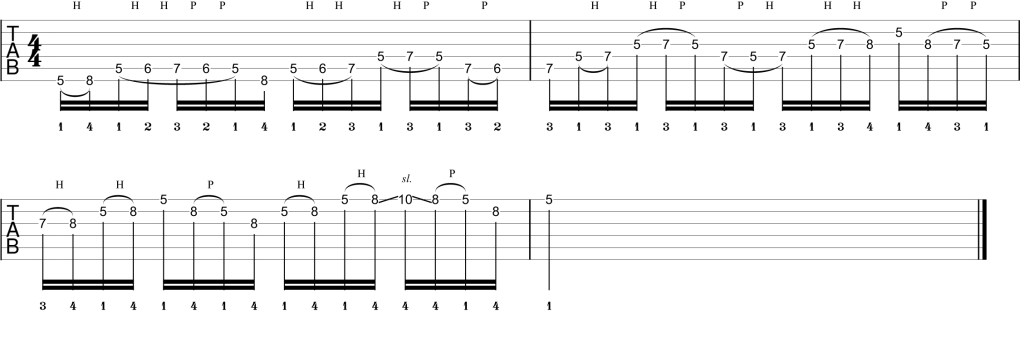
Nowadays I have limited practise time and I want to maximise my learning as much as possible. By combining different elements into a single exercise, I can train multiple skills at the same time. For instance, I am currently learning the blues scale all over the neck and I also want to improve my alternate picking, so I have combined them into the following exercise:

I could also combine the blues scale with things like legato…

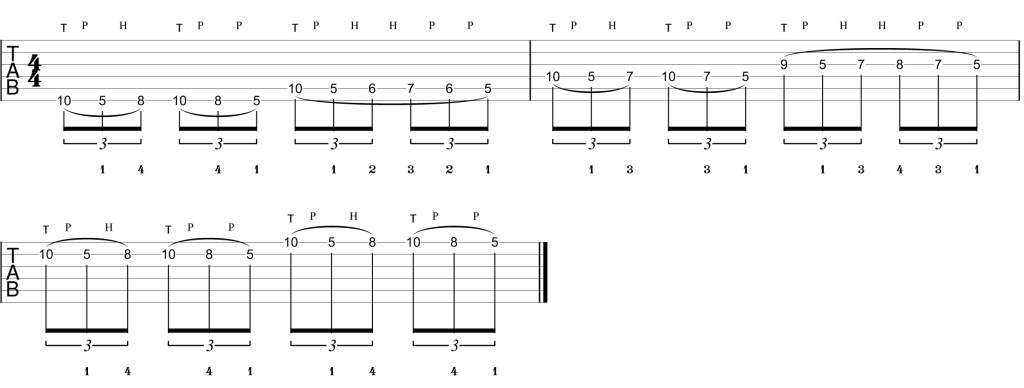
…or tapping….

If youโ€™ve read my book โ€˜Guitar Gymnasiumโ€™ you probably know that I find it beneficial to sing the notes that I am playing on the guitar. This trains my ear and improves the connection between my fingers and my brain. If I did this with any of the examples above, I would be practising three things at the same time.

There are definite benefits to focusing on a single element and getting into the Zen-state, but if you are struggling to find time to practise, this method may help maximise your learning time.


My latest book ‘Guitar Gymnasium: Habits, Hacks and Tricks to Accelerate Your Playing‘ is available on Amazon now.

Focus vs Exploration

“You canโ€™t connect the dots looking forward, you can only connect them looking backwards.

– Steve Jobs
Photo by Ylanite Koppens on Pexels.com

Someone once asked me what makes โ€˜Jumpโ€™ by Van Halen such a good song. I really didnโ€™t know how to answer that. There are so many elements that combine to make it great: the intro keyboard riff, the guitar playing, the singing, the backing vocals, the way the bass and drums interact. Then there are the recording techniques, the tempo of the song, and the personality of the musicians. So many elements that could have gone badly wrong come together to make a great song.

As musicians we spend a lot of time taking leaps into the dark, and that takes faith and trust. We have to trust that our skills will improve, otherwise we wouldnโ€™t practice; when we write a song we are connecting dots (sometimes literally on manuscript), but each note can feel like a blind man in an unfamiliar room, arms extended, trying to get a sense of its shape. It is only when we finish writing the piece that we see the totality of it and how each note seems to โ€œinevitablyโ€ lead to the next. We can only connect the dots looking backwards and we have to initially explore in the blindness before we arrive at the destination. We have to trust it will lead somewhere.

It is important to allow time for cross-pollination between different fields of interest or areas of our lives. Steve Jobs took a calligraphy class in college which later played a part in the typography on the Apple mac. If he was too focussed solely on computers he might have missed that opportunity for cross-pollination. Sometimes it is our side-interests which have the greatest impact on our main passions.

But what about focus?

I have noticed, however, that the times in my life where I have really excelled are when I have solely focussed on one thing for an extended period.

Arnold Schwarzenegger said โ€œknowing how to focus on one thing at a time has made me better at everything I didโ€, and he has certainly achieved a lot in his life across a diverse range of fields such as bodybuilding, real estate, acting and politics. But he did them one at a time.

This means that every day we have to make a decision – we have to choose to either focus or explore.

Focussing on one thing logically means that you must remove all the other things that are distracting you. The idea of โ€œvia negativaโ€ means to improve something by deducting, rather than adding. For instance, to improve your health you may be better off by removing all the sugary drinks from your diet before you add a new workout routine. Deducting is often easier to do (and sustain) compared to adding a new habit.

The times when I have focused on one thing are like meditation: the outside world slows down and every action seems to flow into the next. By sustaining that focus over an extended period of weeks or months, my motivation increases as I can see myself improving, and the habit starts to form, making it easier to continue the upward spiral.

On the other hand, my explorations into different fields make my main passions richer and deeper. For instance, learning about the different energy levels of pencil strokes in art has given me a greater appreciation for the different energy levels that emotion can bring to a musical line on the guitar.

Ultimately, I think the only way to balance these two approaches is to spend extended periods of time doing deep learning, but allow shorter periods of exploration between these extended blocks. This will create a depth of knowledge and understanding within a narrow passion, which will then be enriched by other diverse and seemingly disconnected interests.

Inertia, Incentive and Momentum

Photo by ROMBO on Pexels.com

Inertia and momentum are both spirals, one negative, the other positive. During my own periods of inertia I feel stuck yet unwilling to take any action to improve my circumstances.
But Iโ€™ve also experienced the upward spiral where I am taking action with focus, joy and a calm aggressive determination.

What Iโ€™ve noticed about both of these states is that they seem to spill over into other domains. When Iโ€™m taking consistent action writing or practising music, I find it easier making my bed in the morning or fixing that broken door hinge. Conversely, when Iโ€™m feeling stuck and refusing to improve my situation, I notice that Iโ€™m more reluctant to do chores around the house or exercise. It seems like โ€œtaking actionโ€ is a muscle which can rapidly atrophy within a day or so when not used.

Iโ€™ve read many great books on the science of motivation and many acknowledge that motivational โ€œtheoryโ€ is not enough. To actually take action we need incentive, accountability, a bit of fear, a bit of ego, a bit of confidence, a bit of insecurity, mixed with the possibility of public ridicule if we donโ€™t succeed. Humans are such complex machines and yet in some ways we are also very simple: I may not want to go for a run, but if a lion was chasing me I would suddenly have an incentive to sprint for many miles.
Intellectually I realise that if I just start for two minutes, that would be enough to gain traction and slowly build momentum. But so often I get bogged down in theory, insecurity and the idea of โ€œperfectionโ€ that I donโ€™t get started.

There is also the element of being overwhelmed by too many choices. When searching YouTube for a guitar tutorial, it is easy to flick through the endless stream of videos and never really make a start.
One way I counteract this is to create a schedule. I like to be organised and write out my goals for the year, breaking them down into quarters (i.e. January to March) and then every Friday I write out a schedule for the coming week, so I donโ€™t need to think about what I need to do, I can just execute the task to move nearer to my goals.

Scheduling means I can live my week deliberately whilst scheduling time to watch television or go to the cinema without feeling guilty. It also lets me see where my time is being allocated, so if one of my goals is not scheduled in, I can try to adjust for that the following week or see why it wonโ€™t fit into my schedule.
Disclaimer: During the current covid-19 lockdown I havenโ€™t been doing my weekly schedule and I have noticed a creeping lack of motivation. During times like these it is actually more important to live our lives deliberately, rather than drifting on the tide of current events and daily news.


I notice that the times when I am most motivated is when I have a strong incentive such as practising for a performance, learning a new piece to teach to a student, or going to the gym in the build up to a summer holiday. A strong incentive takes away the element of choice in what we should be doing: if a lion is chasing you, you wonโ€™t debate whether to run or watch Netflix โ€“ youโ€™ll just run!

Maybe the key to motivation is to unleash the lions upon ourselves: book ourselves into an open-mic slot even though we donโ€™t feel ready; join a band even though we arenโ€™t โ€œperfectโ€ yet. I have been procrastinating starting a YouTube channel as I donโ€™t feel confident enough or โ€œauthoritativeโ€ enough. But I also realise that confidence will emerge once I begin: action creates confidence.

How could you unleash your lions?

Should I Buy a New Guitar or Play The One Iโ€™ve Already Got?

I have a dilemma: I am really, really tempted to buy a new guitar. Admittedly it is not a life-shattering problem. I have managed to save some money over the last few months by making packed-lunches for work and not spending money on coffee.

But I also see my dilemma as a deeper issue: can I justify buying another guitar when I really donโ€™t play my current guitar as much as I should?

Part of me knows that I am being pulled in by the marketing that a new guitar will make me a better, more inspired guitarist; the other part of me realises the harsh truth that buying a new guitar will not create more time to practice, and that my improvement as a musician is purely reliant on me focusing on developing my skills and putting in the hours of practice.

I am trying to reconcile what will make me happy and what will give me meaning, and these are very different things. Buying a new guitar will make me happy โ€“ even though it may be transitory – and there is also the anticipation of ordering a guitar, waiting for it to be delivered and then finally unpacking the box and looking at my shiny new guitar with all the case-candy (even just writing these words makes me want to reach for my credit card!).

But the rational part of me thinks that what I really need to do is play more and practice more: finish those songs Iโ€™ve half-written; go through some jazz chord books and expand my harmonic knowledge; re-learn some of the songs I used to be able to play flawlessly, but which are now a little rusty; go through the tutorials from my old guitar magazines; jam along with a backing track. Perhaps if I did this consistently and aggressively, then I could emerge like a Ibanez-swirled-butterfly from the lock-down chrysalis.

As Iโ€™m writing these words, a thought just occurred to me: maybe I should do both: rather than choosing one or the other, I could buy a new guitar and change my mind-set to practice more consistently. Maybe a new guitar will be the catalyst to kick-start my motivation?

If you have any suggestions, put them in the comments!


Latest book available on Amazon now!

My latest book ‘Guitar Gymnasium: Habits, Hacks and Tricks to Accelerate Your Playing‘ is available on Amazon now.

What Iโ€™m Learning This Week: Pentatonic Scales

This week I have been focusing on learning the pentatonic scales across the whole fretboard. I realised my knowledge of pentatonic scales was lacking when I recently learnt the solo to โ€˜No More Tearsโ€™ by Ozzy Osbourne and thought Iโ€™d have a go at improvising my own pentatonic solo over the backing trackโ€“ it sounded pretty terrible! I was comfortable playing in the standard pentatonic positionโ€ฆ

โ€ฆbut moving away from this familiar shape it became clear that I really didnโ€™t know my pentatonics well enough.

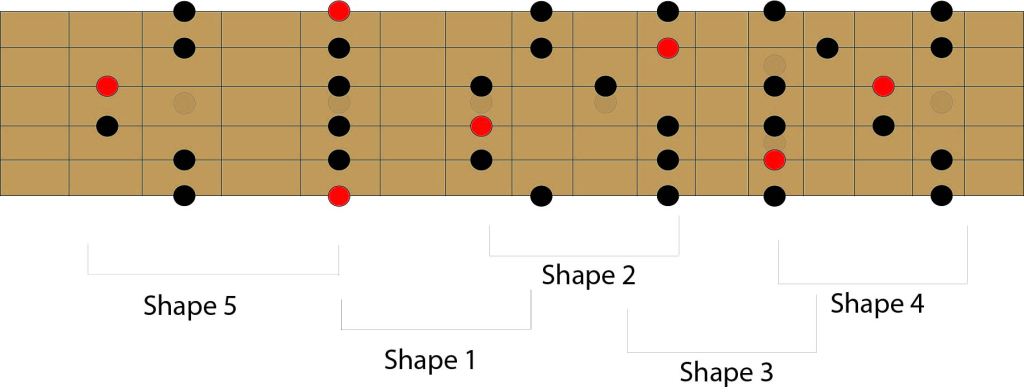
So I started from basic principles: the pentatonic scale has five notes, so therefore there must be five different shapes to learn. Next, I started with an overview of the fretboard, with the five shapes laid out geographically:

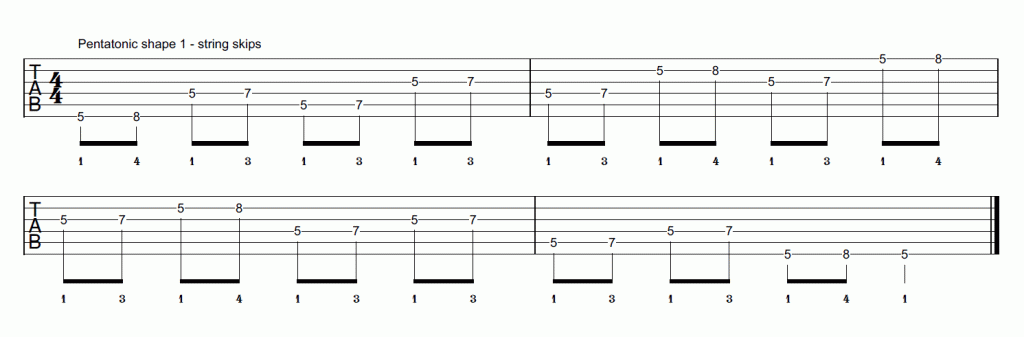
This gave me an overall feel for how they were laid out, but it felt a little daunting to try and learn everything in one go, so I broke it down into individual shapes, playing each one up and down like the example at the top of the page. Then I varied it with things like string skips:

Once I had played through each shape with different exercises and I felt comfortable with each shape, I started joining them together.

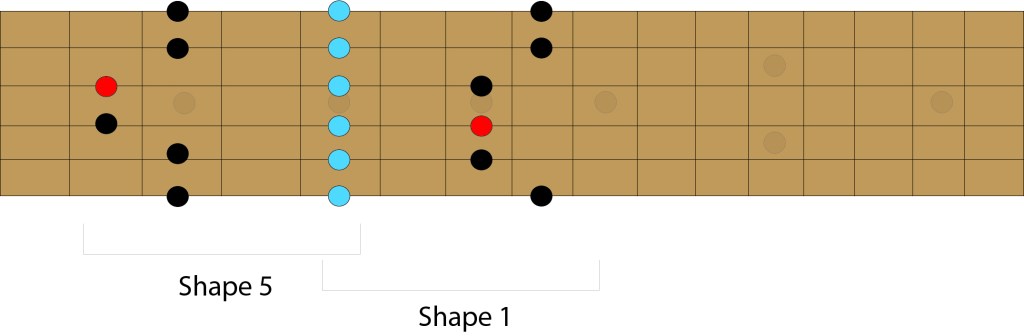
I already knew shape 1 pretty well, but I noticed that each shape overlaps with the neighbouring shape โ€“ i.e. the notes played with my first finger in Shape 1 are the same notes played with my little finger in Shape 5:

This made it easier joining the shapes as I realised they were like jigsaw pieces that slotted together.

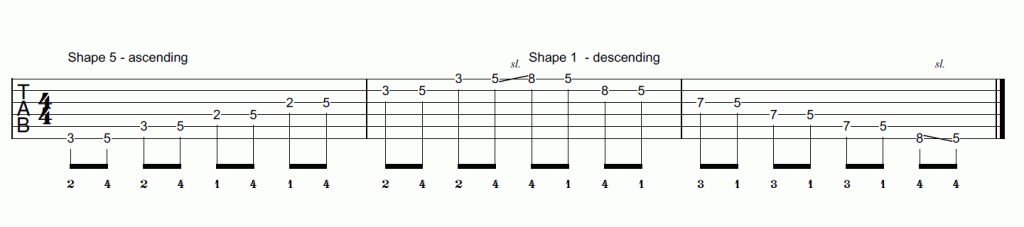
One exercise I used was playing Shape 5 ascending, followed by Shape 1 descending. Note the finger slide where we shift position:

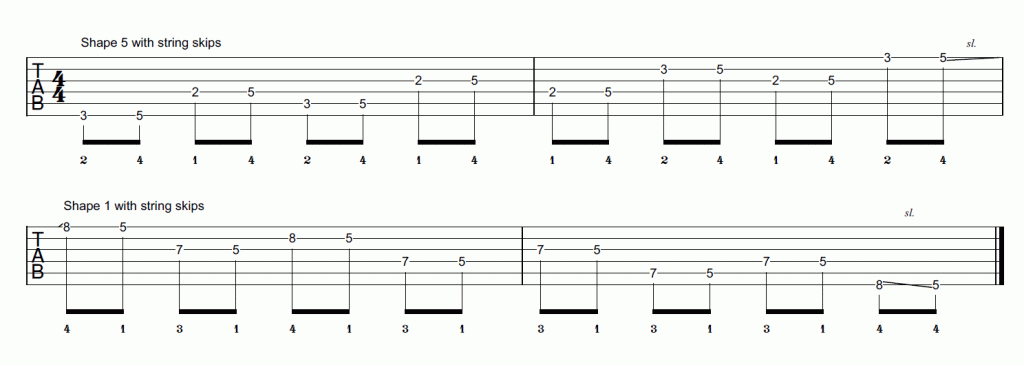
Once I could play this from memory, I introduced other variations to attack the pentatonic scale from different angles. Once such exercise is to play Shape 5 ascending with string skips, and then shape 1 descending with string skips:

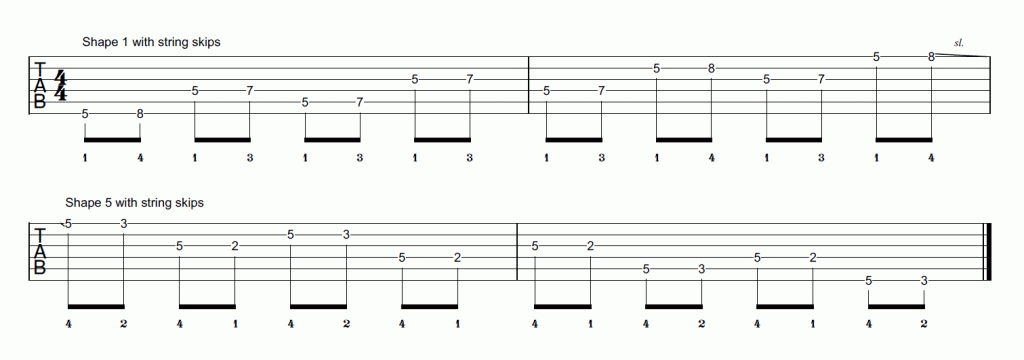
And then a variation of this, starting with Shape 1:

It is important to play these slowly and ensure you are consciously aware of each shape as you are playing it, rather than mindlessly shredding through each exercise. The idea here is to commit each shape to memory so we can build our mental framework of the fretboard.

I gradually devised more exercises encompassing the other shapes, until I was playing all across the neck and I now feel very comfortable with these shapes over the entire fretboard. I donโ€™t know about you, but I really want to maximise my freedom of expression on the guitar and I hate feeling like my expression is being limited by a lack of technical knowledge or understanding.

By working on these simple techniques we build up our knowledge of the guitar fretboard, giving us the musical framework to express our creativity.

I am currently collating the entire collection of pentatonic exercises I devised into an eBook which will be available on Amazon soon, as I realised that other guitarists would really benefit from the same exercises that helped me.

Guitar Technique vs Style

“โ€ฆyou’ve got to have style in whatever you do — writing, music, painting, fashion, boxing, anything.”

Miles Davis

When learning a new technique on the guitar, thereโ€™s an abundance of online material showing us how to perform a technique โ€˜properlyโ€™. But how can we develop our own style if we learn using the same method as everyone else?

Steve Vai has mentioned in numerous interviews how he would sit with his guitar and focus on a single technique until he had found something he hadnโ€™t heard before. As an example, the standard way to perform vibrato on the classical guitar is by moving your finger along the string; in Rock guitar, vibrato is traditionally performed by slightly bending the string towards the floor. Rather than stick with these traditional methods, Vai realised he could combine them into a circular vibrato, which would give him a unique sound.

For a great demonstration of this, watch his video here: https://youtu.be/wuRS_hQLLRg)

Tom Morello is another great guitarist who has developed his own unique style by circumventing the traditional approach. By using the pickup selector as a kill-switch and scratching the strings he has been able to make his guitar sound like a sampler or DJ decks.

But developing a unique sound doesnโ€™t need to be so extreme: Stevie Ray Vaughnโ€™s aggressive style is partly attained by his thick strings and heavy picking. Michael Hedges gave his acoustic guitar a percussive edge by tapping the strings, neck, body and head.

So when we learn a new technique, should we just figure it out from scratch by ourselves?

I think it is usually quickest to learn a new technique by following someone elseโ€™s instruction, as this avoids a lot trial-and-error. But once youโ€™ve learnt the basic technique donโ€™t rush straight onto the next technique. Instead, experiment with different ways of performing a technique and try to make it your own.

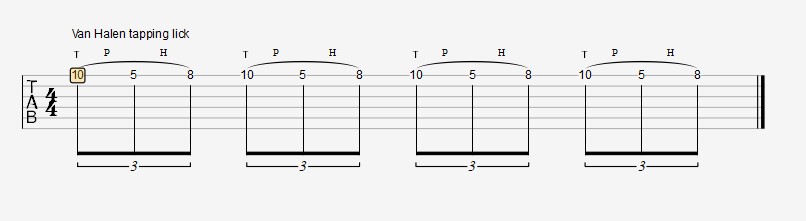
When I was younger , I learnt two-handed tapping using the typical Van Halen style lick:

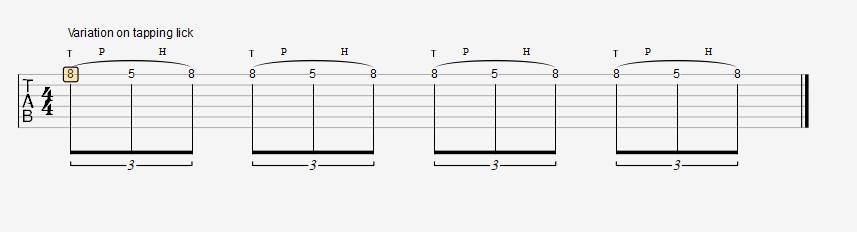
I then thought of different ways to make it unique. One was to tap and hammer onto the same fret, giving a kind of double-tap sound:

Whilst this isnโ€™t exactly an earth-shattering innovation, it does show that you can add your own twist on a technique. If you can create ten variations of every technique, you will start to develop your own unique style.

Let me know in the comments what technique you are working on and how you can make it unique.


My latest book ‘Guitar Gymnasium: Habits, Hacks and Tricks to Accelerate Your Playing‘ is available on Amazon now.

Do you hear the silence between songs?

โ€œThe music is not in the notes, but in the silence between.โ€

Claude Debussy

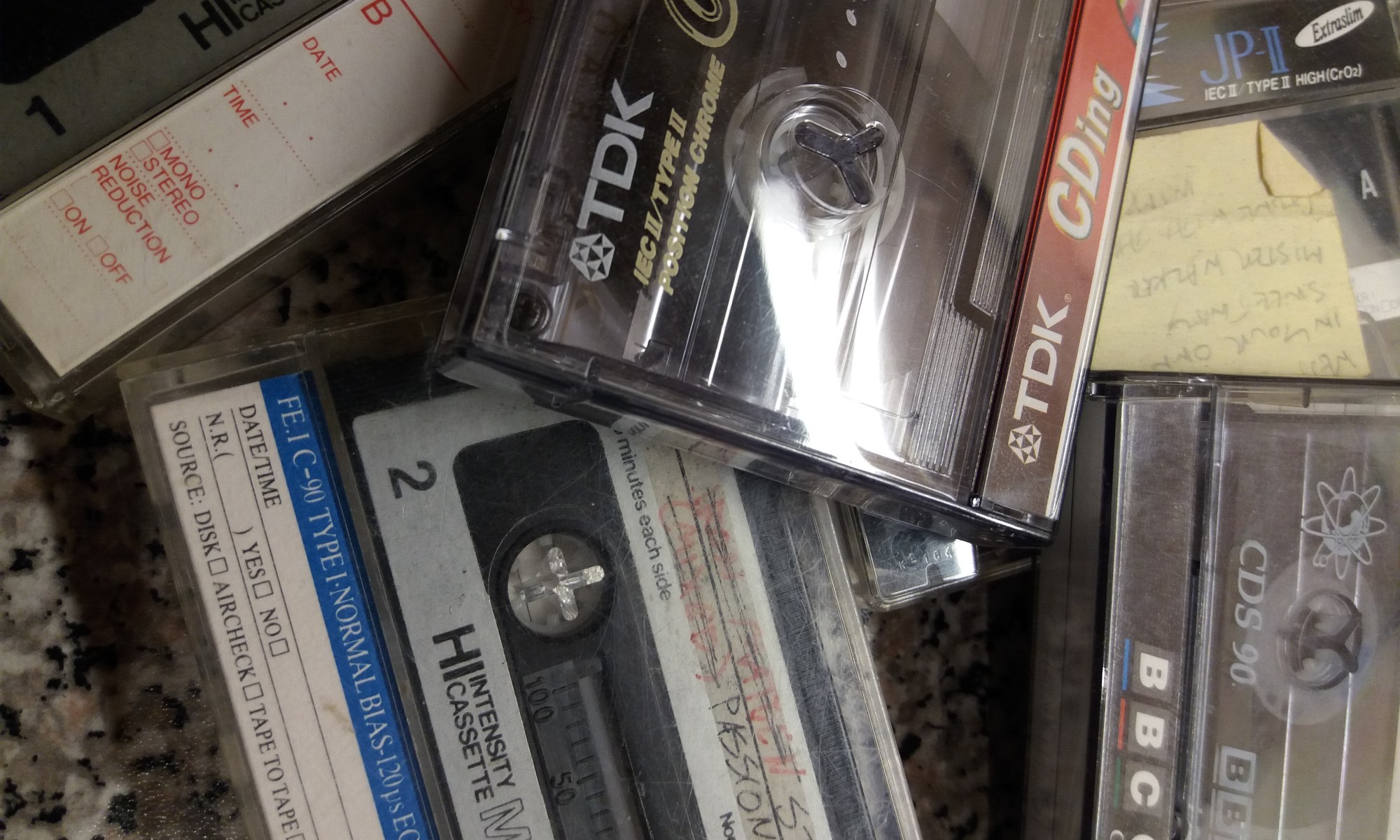
As a teenager I used to buy all my music on cassette tape, partly because they were much cheaper than CDs but also because they were small and portable, meaning I could listen to them in my mumโ€™s car or easily take them to my friendโ€™s house. There were also other benefits to cassettes which were less obvious at the time, but are now clearer with hindsight.

Firstly, songs on cassettes were not easily skippable. This meant I would usually listen to a whole album from start to finish (with the occasional rewind to repeat an epic guitar solo) and even the songs I didnโ€™t initially like would work their way into my playlist until they became favourites. These days I hardly ever listen to a whole song, let alone a whole album, and this song-hopping seems to be encouraged by services like Spotify, whether intentionally or not.

More importantly, I never listen to the silence between the songs any more. That little space gave me some breathing room to digest what I had just heard, and sometimes that space was playfully manipulated by the artist: Def Leppardโ€™s โ€˜Animalโ€™ has a false ending before the chorus comes back in a final time; Extremeโ€™s song โ€˜Liโ€™l Jack Hornyโ€™ gradually fades out, but then fades back in before coming to a definite end. If you listen to โ€˜Never Ending Storyโ€™ by Giorgio Moroder, you can hear it starts with a fade-in and ends with a fade-out, so the song really is never ending as it has no definite start or finish.

The space between songs has now been replaced by adverts, but that is the trade-off for listening to free music. Donโ€™t get me wrong, I love being able to discover new music on digital platforms โ€“ I canโ€™t tell you how much money I wasted as a kid on bad albums where the artist only had one good song. Being able to listen for free before I buy their work creates an incentive for the artist to give 100% effort into their output, rather than having an album of filler.


By listening to whole albums, I could appreciate the way the songs were ordered on the album. There was also thought given to the start and end of an album. For instance Steve Vaiโ€™s โ€˜Sex and Religionโ€™ album starts with a piece called โ€˜An Earth Dwellerโ€™s Return‘. This music is then reprised when it fades in at the end of the final song โ€˜Rescue Me or Bury Meโ€™, giving the whole album a โ€˜book endโ€™ effect.

โ€˜Sgt. Pepperโ€™ by the Beatles was the first album to feature continuous music, using cross-fades to remove the silence between the songs. Albums such as Tubular Bells II by Mike Oldfield carried on this tradition and this approach doesnโ€™t lessen each song. Oldfield gave great thought to determine whether a song abruptly switches into the next (โ€˜Red Dawnโ€™ into โ€˜The Bellโ€™), or gently fades into the next (โ€˜Sunjammerโ€™ into โ€˜Red Dawnโ€™), or gradually morphs into the next (โ€˜Dark Starโ€™ to โ€˜Clear Lightโ€™).

The silence between songs gives a resonance to the musical statement, a moment for our ears to hear total silence.

“โ€ฆTHE IDEAL WAY Iโ€™D HOPE A LISTENER EXPERIENCE MY MUSIC IS TO GRAB A GREAT SET OF HEADPHONES, SIT WITH THE VINYL, DROP THE NEEDLE, HOLD THE JACKET IN YOUR HANDS LOOKING AT THE ARTWORK (WITH YOUR FUCKING PHONE TURNED OFF) AND GO ON A JOURNEY WITH ME

Trent Reznor

The resonance and reflection of silence is also applicable to our daily lives. Drinking a morning coffee in silence or quietly walking on our own creates moments of active silence, allowing us to appreciate music even more, as we get to temporarily experience the absence of music.

Write Great Songs By Developing Intuition

“For a songwriter, you donโ€™t really go to songwriting school; you learn by listening to tunes. And you try to understand them and take them apart and see what theyโ€™re made of, and wonder if you can make one, too”

Tom Waits

When learning an instrument we usually apply โ€˜deliberate practiceโ€™, working methodically and efficiently to improve our skills. When writing songs, however, we instead use intuition to express our feelings and emotions.

In reality, they are two sides of the same coin: with enough deliberate practice a new skill sinks into our unconscious, becoming automatic intuition. But how can we use these two parts of the brain to help us write better songs?

With deliberate practice we must learn something so deeply that we can then forget it. We would learn scales until we no longer consciously think about them, and they instead form an invisible framework that sits in our unconscious.

There are a lot of musicians, such as Jeff Beck, Eddie Van Halen and Noel Gallagher who claim to know no music theory, relying instead on intuition to write a song; although Iโ€™m sure they spent many years learning lots of songs. This may not be โ€˜deliberate practiceโ€™, but all those songs will sink into the intuition of the artist and inform the songs they write in the future. Noel Gallagherโ€™s years of listening to The Beatles clearly had a massive influence on his song writing.

So one way to develop our intuition for writing great songs is to simply learn lots of songs by other artists. But if we wanted to go deeper than that, we could analyse songs more methodically. At the moment I am teaching a student โ€˜Patienceโ€™ by Guns Nโ€™ Roses . The verse chords are C โ€“ G โ€“ A โ€“ D,  so the key is G major, starting on the IV chord (โ€˜Cโ€™), and then moving to the I chord (โ€˜Gโ€™). It then starts to shift key, using A major to temporarily modulate to D.

The fact that we know this doesnโ€™t necessarily help us to write a song, but we could steal the chord progression to use in our own songs, twisting it and blending it with our other influences, internalising the chord progression and adding it into our vocabulary.

Analysing music helps you to understand why a song works (i.e. after itโ€™s been written), but it doesnโ€™t help you write one from scratch. The pop songwriter Max Martin, who has written numerous hits song for Britney Spears, Taylor Swift and Kelly Clarkson, said in an interview with NME magazine:

“…a great pop song should be felt when you hear it

Max Martin

Although you may not be writing pop music, the point remains the same โ€“ donโ€™t let the theory get in the way of the song. When I studied music at university, there were many teachers who were really good classical composers, but they couldnโ€™t write a good song. Their music was too deliberate and lacked spontaneity.

Composers are more like architects and songwriters are like gardeners: to write a classical piece you need to have balance, thought and structure deliberately built into the process; to be a songwriter you need to let the piece naturally grow from a source outside of yourself.

The initial spark of the song will be ignited by your intuition; but the fire of your intuition must be fuelled with continual practice. If you do that, your intuition will always be there when you need it.

Ways to develop intuition in song writing:

  • Play anything for ten minutes without judging whether it is good or bad. I really struggle with this, but my brain eventually calms down after a few minutes.
  • Record yourself whilst playing for ten minutes. You may listen back later and hear a few gems that you missed. Distance often helps us gain a new perspective.
  • Write with other people.
  • Donโ€™t expect anything to happen โ€“ just let it happen.
  • Write often. You need to write a few bad songs to get to the good songs.
  • Whilst Iโ€™m writing, I sometimes visualise that Iโ€™m improvising a song to an audience of friends, family or strangers. This takes my conscious mind off what Iโ€™m doing and helps with flow.

Ways to apply deliberate practice in song writing

  • Learn lots of your favourite songs.
  • Analyse the chord progressions.
  • Analyse how the notes of the melody sit over the chords: are they consonant or dissonant (i.e. are they notes within the chord or outside of the chord)?
  • Analyse the shape of the song: is the chorus melody the same as the verse melody (e.g. โ€˜I Wanna be Your Loverโ€™ by Prince); Are the chorus and verse chords the same (e.g. โ€˜High and Dryโ€™ by Radiohead)?
  • Analyse the note clusters of the melody: is the verse melody made up of only long notes, or only short rhythmic notes, or a mixture? Does the chorus melody contrast this by doing the opposite?
  • How are the principles of repetition, contrast and development used?

My latest book ‘Guitar Gymnasium: Habits, Hacks and Tricks to Accelerate Your Playing‘ is available on Amazon now.

Use Limitations to Write a Song Today

“The more constraints one imposes, the more one frees oneโ€™s self.. “

Igor Stravinsky

The blank page, the empty canvas and the silent guitar are the most difficult starting points, yet that is where we must all begin. When our options are infinite it is difficult to make creative decisions, but we can channel and focus our creativity by setting restrictions and limitations.

Below are some limitations you can use to write a song today. These are only starting points which we can always change later:

  • Limit yourself to some simple chords: C, Am, F, G. You might change these later, but they will serve as a good starting point.
  • Think of a rhythm you can use for the melody โ€“ donโ€™t worry about what pitches will be sung, just the rhythm. You can keep it simple and use a rhythm similar to the word โ€œcoff-eeโ€  on each beat, or do something like:
  • Now play the chords whilst you hum the rhythm you previously made. Start by using one pitch for the whole rhythm, and then make some notes higher and some notes lower. There are lots of good melodies which are based on only one or two pitches, such as the verse of โ€œI Am The Walrusโ€ by the Beatles, the verse of โ€œManic Mondayโ€ written by Prince, and the verse of โ€œChampagne Supernovaโ€ by Oasis.
  • After a bit of experimenting you will have a basic structure which you can start to sculpt. Try changing the chords, switching the order of the chords, or change chords at a quicker pace  (harmonic rhythmโ€).
  • When youโ€™re ready to create the next section, repeat the process above, perhaps starting with different chords.

The tips above are for when you feel stuck and uninspired. In his great book โ€˜On Writingโ€™, Stephen King says โ€œWriting equals ass in chairโ€. If your inspiration is flowing, then grab it and seize the moment without over-analysing it.

Following the process above doesnโ€™t guarantee youโ€™ll write a great song, but you will write a song of some sort. Many legendary musicians have lots of songs that have never seen the light of day: Princeโ€™s famous โ€˜vaultโ€™ contains thousands of unreleased songs; Adeleโ€™s initial songs for the hit album โ€˜25โ€™ were shelved after legendary producer Rick Rubin thought they could be better.

If you write a hundred songs, most will be mediocre, but a handful will be good; and the more you write, the better you will become.

No one in existence has lived the same life as you, and no one except you can write the songs of your life.