All great guitarists have their own distinctive style.
Steve Vai, Tom Morello, Jimi Hendrix and Kurt Cobain have a sound and style
which is immediately identifiable. Below are five tips to help you find your
own style.
Don’t just ask
“How do I do this?”
When we want to learn something new our first instinct is
to find a tutorial video on YouTube, which is absolutely fine and is a great
way to learn. However, once we’ve learnt a new song or technique the temptation
is to quickly move on to the next thing, learning everything in a superficial
manner. To really master something we need to go deeper.
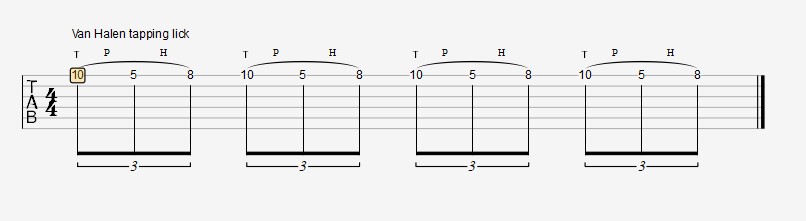
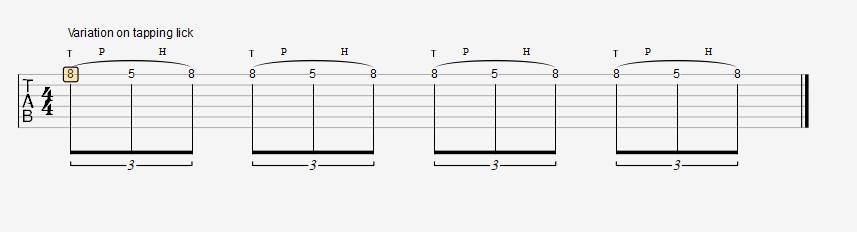
For instance, once you understand two-handed tapping, expand
on the technique and develop your own way of doing it. Some experimental ideas
are: mix tapped harmonics with normal tapping, bend whilst tapping, slide
whilst tapping, tap across multiple strings, include the whammy bar whilst
tapping, detune the tuning peg whilst tapping, tap on the pickup rather than
the neck. Once you have found something that sounds good, start writing lots of
different licks based around the new technique to incorporate it into your
playing.
Learn from other
instruments
Other instruments have a range of techniques we can blend
into our own style. Violinists can make the volume of a note “swell” from very
quiet to very loud and this technique has been copied many times on the guitar
by using the volume control. Maybe you could use the volume control in a
different way?
The gamelan orchestras of Bali do not tune to a standard
pitch, giving each orchestra its own
unique sound. What would happen if you tuned your guitar in a non-standard way
or your whole band tuned their instruments in a different way?
Saxophone players breathe between phrases and this can be
copied on the guitar by leaving a moment of silence between our licks. What if
you left more silence in your playing?
Because pianists have ten fingers, they can play ten
notes at the same time – could you think of a way to do this on the guitar,
even though we only have 6 strings?
Don’t just learn
songs – master them
Often we learn songs and then forget about them, or we
might dust them off when Auntie Dorothy comes to visit and wants to hear us
play.
Instead, our aim should be to master songs. We can do
this by going deeper and understanding the musical framework of the song: why are
certain chords used? How do these chords fit within the key structure? What if
we re-harmonised the song using different chords?
If you have learnt a solo, analyse the scales used and
how they fit with the underlying chords; write ten variations of the solo; use
different areas of the neck to play the solo; write your own version of the solo
but only using two strings.
By building up our mental models, we can understand the
musical structures and retain the music in our long-term memory.
Learn from your
hero’s heroes.
We all have favourite guitarists and it is a great idea
to find out who they were inspired by and see if we can learn from them.
If you love Van Halen, go back to Eric Clapton; if you
love Steve Vai, listen to Frank Zappa or go back even further to Zappa’s big
influence, the classical composer Edgar Varese. You may find that you don’t
like the music or you may find a new favourite musician to learn from.
By finding commonalities between our heroes and their
mentors, we can figure out exactly what it is we like about their style and
incorporate it deliberately in our own playing: Steve Vai’s use of the Lydian
mode is derived from both Frank Zappa and Joe Satriani; Van Halen’s use of
two-handed tapping is derived from Allan Holdsworth’s long legato lines, but
his aggressive bluesy soloing is influenced by Eric Clapton and Jimmy Page.
Once you dig into their style, you can follow the process
of Learn, Assimilate, Expand – meaning
that you learn it, merge it into your playing, then expand on it to make it
your own.
Inner States and
External Music
Our inner state affects everything we do on the guitar. Certain
guitarists will play very aggressively, like Zakk Wylde or Dimebag Darrell, and
that aggression will manifest itself externally by angling the pick for a more
aggressive sound or hitting the strings harder. Others guitarists like Eric
Johnson or Lari Basilio will have gentler or more playful personalities and
this will be expressed physically by picking with their fingers or pressing a
chord down very gently.
Our inner state also affects whether we play very short
aggressive phrases or long flowing melodic lines. It will dictate which notes
we end each phrase on and whether we play all over the neck or stay in one
position in the middle of the neck.
As humans we all experience a wide spectrum of emotions and feelings, and the guitar is a great instrument for expressing these. We can set our intention before we even pick up the instrument and can deliberately focus our emotions to be calm, aggressive, melancholy, joyful or excited and the guitar will respond to these feelings. Practising scales and exercises is essential, but only so we can express ourselves fully on our chosen instrument.
 Impact Guitar