I hate the word “multi-tasking” as it usually means doing two things poorly rather than one thing well. In my youth – when I had no responsibilities – I would practise in a very focused manner; if I wanted to improve my alternate picking, I would practise something like this:
Likewise, if I wanted to practise legato, I would do this:
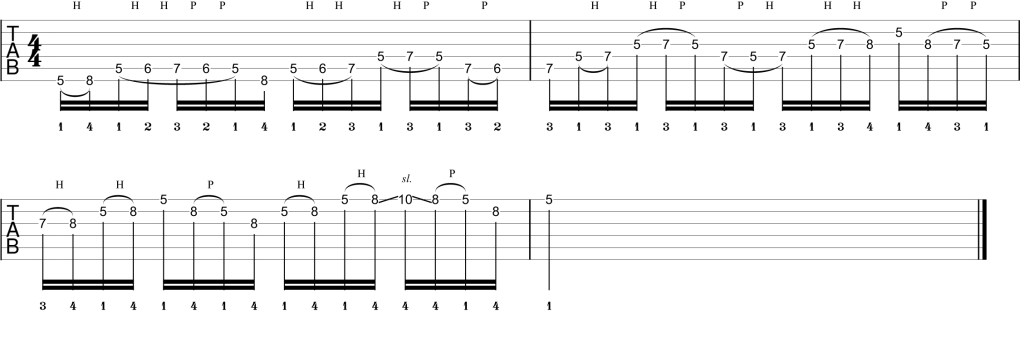
Nowadays I have limited practise time and I want to maximise my learning as much as possible. By combining different elements into a single exercise, I can train multiple skills at the same time. For instance, I am currently learning the blues scale all over the neck and I also want to improve my alternate picking, so I have combined them into the following exercise:
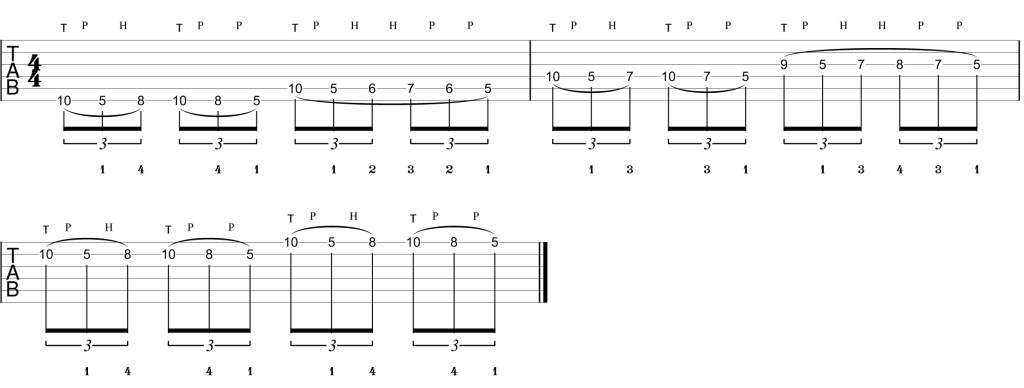
I could also combine the blues scale with things like legato…
…or tapping….
If you’ve read my book ‘Guitar Gymnasium’ you probably know that I find it beneficial to sing the notes that I am playing on the guitar. This trains my ear and improves the connection between my fingers and my brain. If I did this with any of the examples above, I would be practising three things at the same time.
There are definite benefits to focusing on a single element and getting into the Zen-state, but if you are struggling to find time to practise, this method may help maximise your learning time.
This week I have been focusing on learning the pentatonic scales across the whole fretboard. I realised my knowledge of pentatonic scales was lacking when I recently learnt the solo to ‘No More Tears’ by Ozzy Osbourne and thought I’d have a go at improvising my own pentatonic solo over the backing track– it sounded pretty terrible! I was comfortable playing in the standard pentatonic position…
…but moving away from this familiar shape it became clear that I really didn’t know my pentatonics well enough.
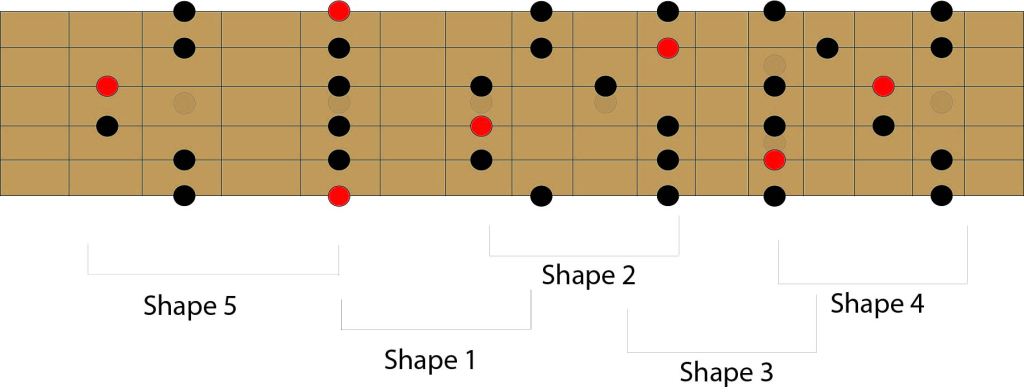
So I started from basic principles: the pentatonic scale has five notes, so therefore there must be five different shapes to learn. Next, I started with an overview of the fretboard, with the five shapes laid out geographically:
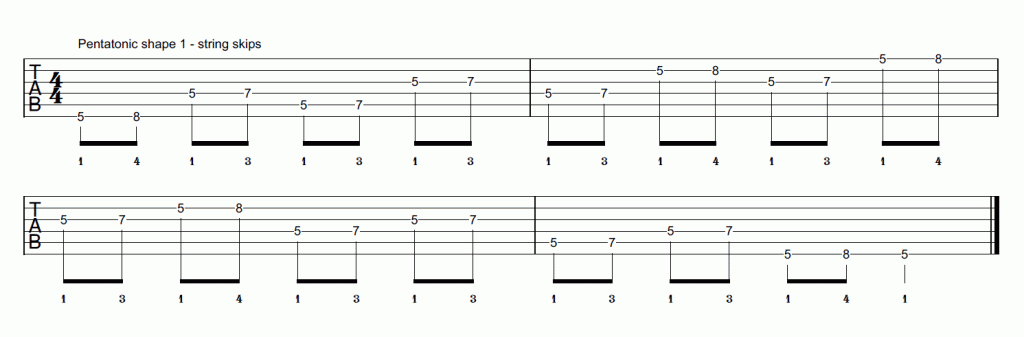
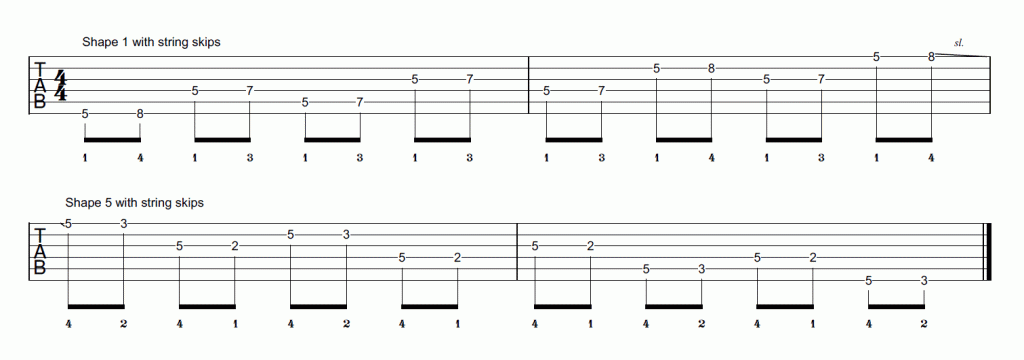
This gave me an overall feel for how they were laid out, but it felt a little daunting to try and learn everything in one go, so I broke it down into individual shapes, playing each one up and down like the example at the top of the page. Then I varied it with things like string skips:
Once I had played through each shape with different exercises and I felt comfortable with each shape, I started joining them together.
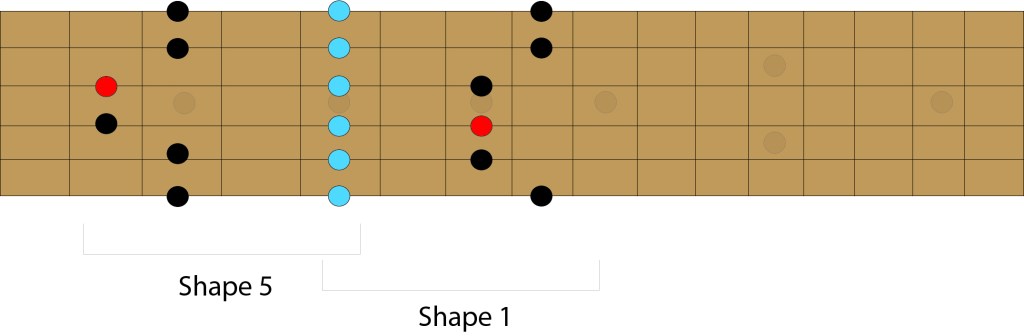
I already knew shape 1 pretty well, but I noticed that each shape overlaps with the neighbouring shape – i.e. the notes played with my first finger in Shape 1 are the same notes played with my little finger in Shape 5:
This made it easier joining the shapes as I realised they were like jigsaw pieces that slotted together.
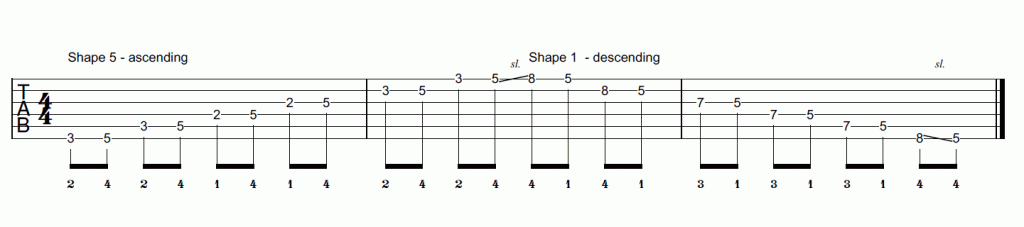
One exercise I used was playing Shape 5 ascending, followed by Shape 1 descending. Note the finger slide where we shift position:
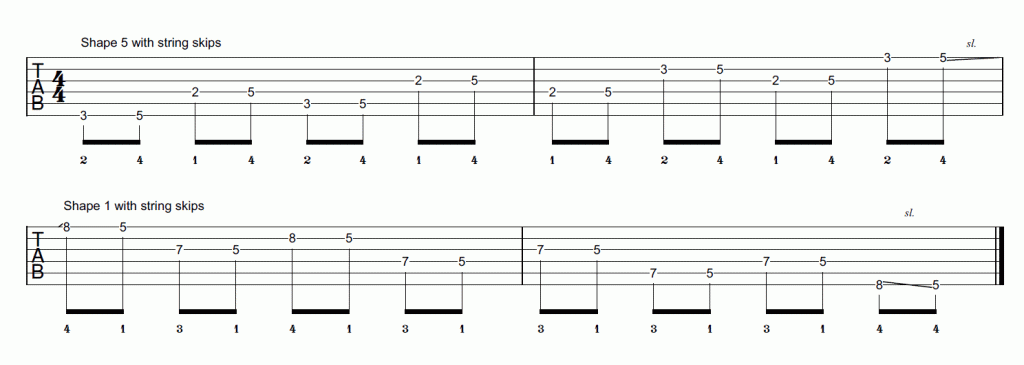
Once I could play this from memory, I introduced other variations to attack the pentatonic scale from different angles. Once such exercise is to play Shape 5 ascending with string skips, and then shape 1 descending with string skips:
And then a variation of this, starting with Shape 1:
It is important to play these slowly and ensure you are consciously aware of each shape as you are playing it, rather than mindlessly shredding through each exercise. The idea here is to commit each shape to memory so we can build our mental framework of the fretboard.
I gradually devised more exercises encompassing the other shapes, until I was playing all across the neck and I now feel very comfortable with these shapes over the entire fretboard. I don’t know about you, but I really want to maximise my freedom of expression on the guitar and I hate feeling like my expression is being limited by a lack of technical knowledge or understanding.
By working on these simple techniques we build up our knowledge of the guitar fretboard, giving us the musical framework to express our creativity.
I am currently collating the entire collection of pentatonic exercises I devised into an eBook which will be available on Amazon soon, as I realised that other guitarists would really benefit from the same exercises that helped me.
“…you’ve got to have style in whatever you do — writing, music, painting, fashion, boxing, anything.”
Miles Davis
When learning a new technique on the guitar, there’s an abundance of online material showing us how to perform a technique ‘properly’. But how can we develop our own style if we learn using the same method as everyone else?
Steve Vai has mentioned in numerous interviews how he would sit with his guitar and focus on a single technique until he had found something he hadn’t heard before. As an example, the standard way to perform vibrato on the classical guitar is by moving your finger along the string; in Rock guitar, vibrato is traditionally performed by slightly bending the string towards the floor. Rather than stick with these traditional methods, Vai realised he could combine them into a circular vibrato, which would give him a unique sound.
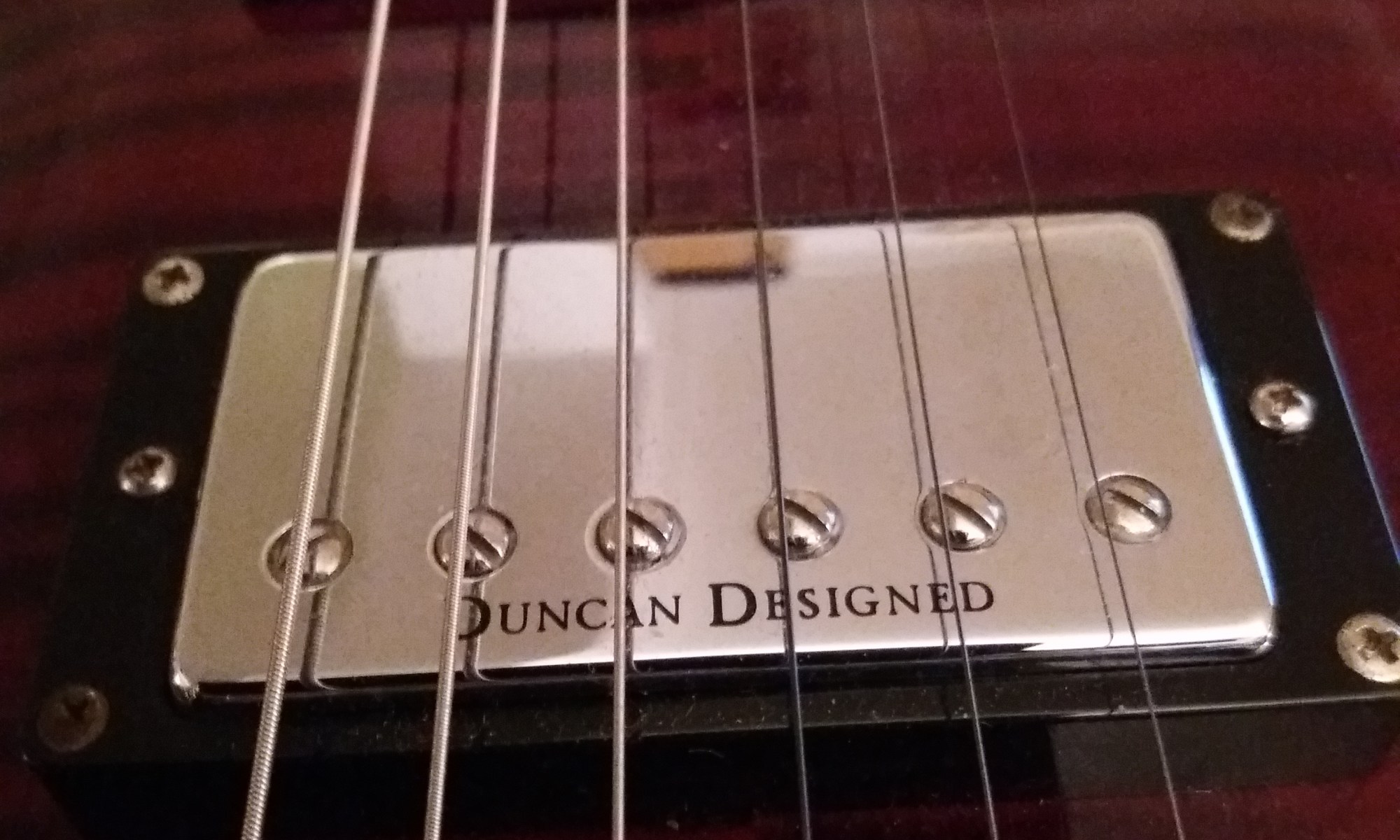
Tom Morello is another great guitarist who has developed his own unique style by circumventing the traditional approach. By using the pickup selector as a kill-switch and scratching the strings he has been able to make his guitar sound like a sampler or DJ decks.
But developing a unique sound doesn’t need to be so extreme: Stevie Ray Vaughn’s aggressive style is partly attained by his thick strings and heavy picking. Michael Hedges gave his acoustic guitar a percussive edge by tapping the strings, neck, body and head.
So when we learn a new technique, should we just figure it out from scratch by ourselves?
I think it is usually quickest to learn a new technique by following someone else’s instruction, as this avoids a lot trial-and-error. But once you’ve learnt the basic technique don’t rush straight onto the next technique. Instead, experiment with different ways of performing a technique and try to make it your own.
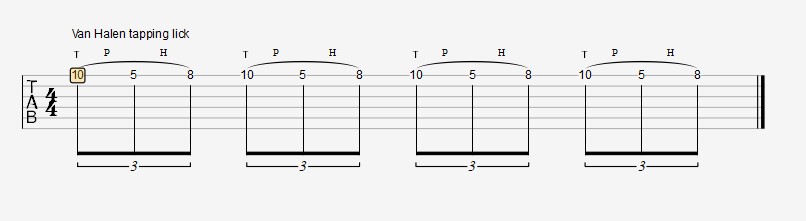
When I was younger , I learnt two-handed tapping using the typical Van Halen style lick:
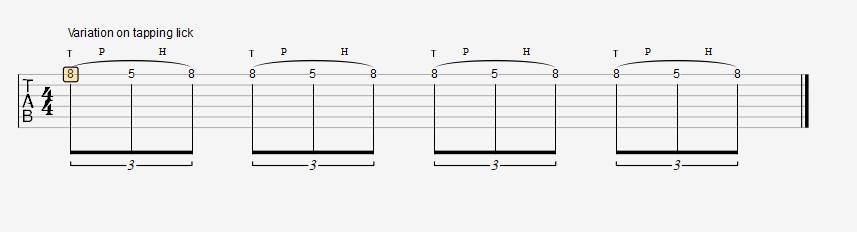
I then thought of different ways to make it unique. One was to tap and hammer onto the same fret, giving a kind of double-tap sound:
Whilst this isn’t exactly an earth-shattering innovation, it does show that you can add your own twist on a technique. If you can create ten variations of every technique, you will start to develop your own unique style.
Let me know in the comments what technique you are working on and how you can make it unique.




 Impact Guitar