This week I have been focusing on learning the pentatonic scales across the whole fretboard. I realised my knowledge of pentatonic scales was lacking when I recently learnt the solo to ‘No More Tears’ by Ozzy Osbourne and thought I’d have a go at improvising my own pentatonic solo over the backing track– it sounded pretty terrible! I was comfortable playing in the standard pentatonic position…

…but moving away from this familiar shape it became clear that I really didn’t know my pentatonics well enough.
So I started from basic principles: the pentatonic scale has five notes, so therefore there must be five different shapes to learn. Next, I started with an overview of the fretboard, with the five shapes laid out geographically:
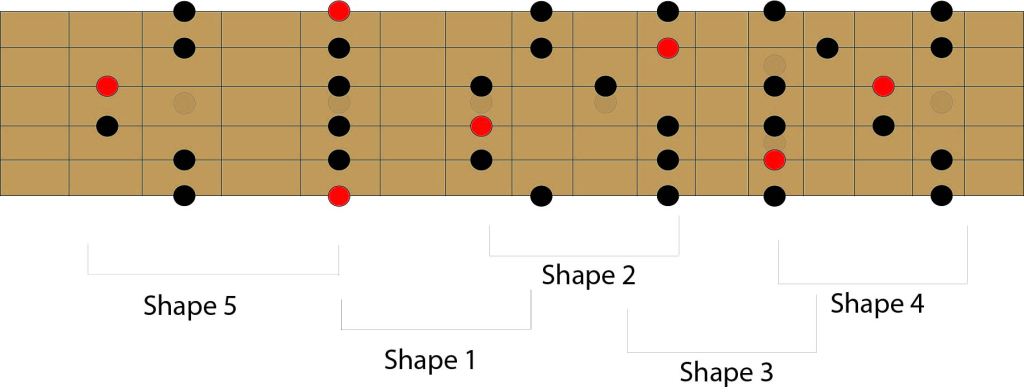
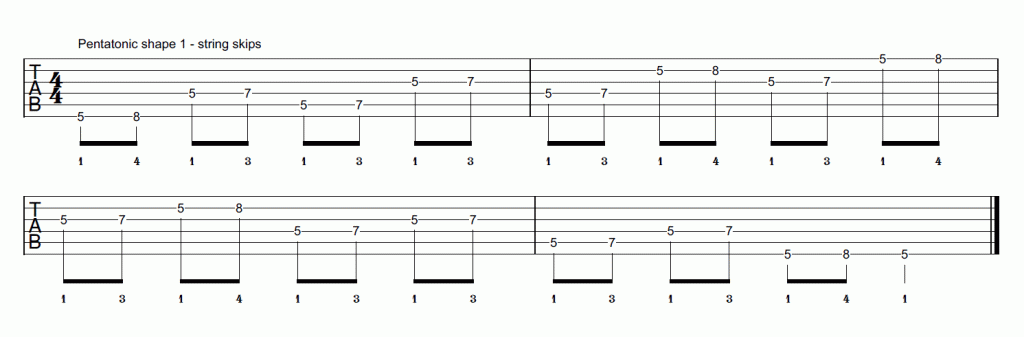
This gave me an overall feel for how they were laid out, but it felt a little daunting to try and learn everything in one go, so I broke it down into individual shapes, playing each one up and down like the example at the top of the page. Then I varied it with things like string skips:
Once I had played through each shape with different exercises and I felt comfortable with each shape, I started joining them together.
I already knew shape 1 pretty well, but I noticed that each shape overlaps with the neighbouring shape – i.e. the notes played with my first finger in Shape 1 are the same notes played with my little finger in Shape 5:
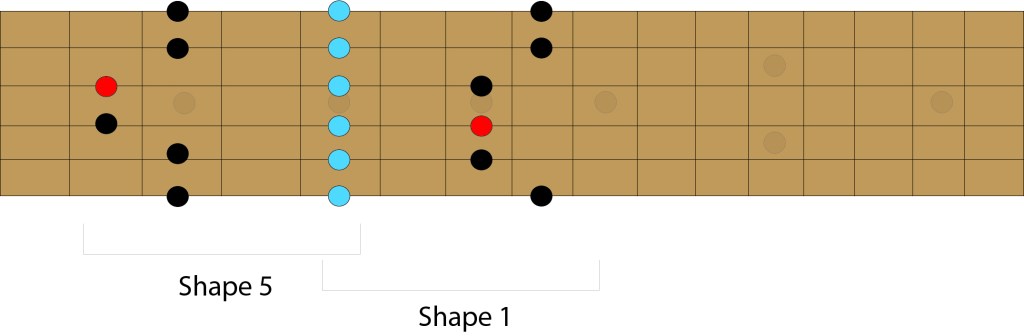
This made it easier joining the shapes as I realised they were like jigsaw pieces that slotted together.
One exercise I used was playing Shape 5 ascending, followed by Shape 1 descending. Note the finger slide where we shift position:
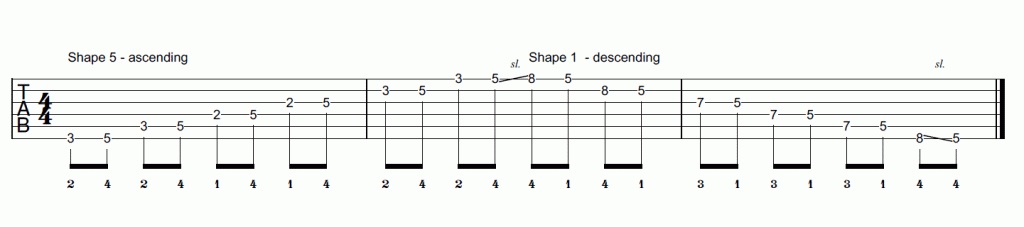
Once I could play this from memory, I introduced other variations to attack the pentatonic scale from different angles. Once such exercise is to play Shape 5 ascending with string skips, and then shape 1 descending with string skips:
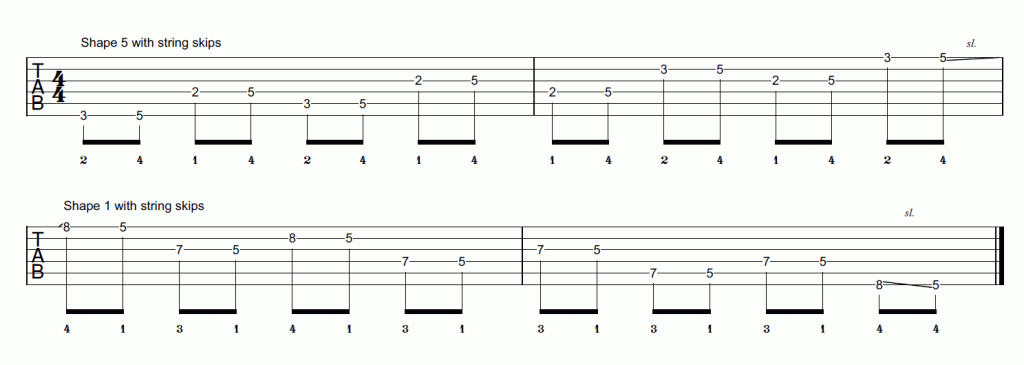
And then a variation of this, starting with Shape 1:
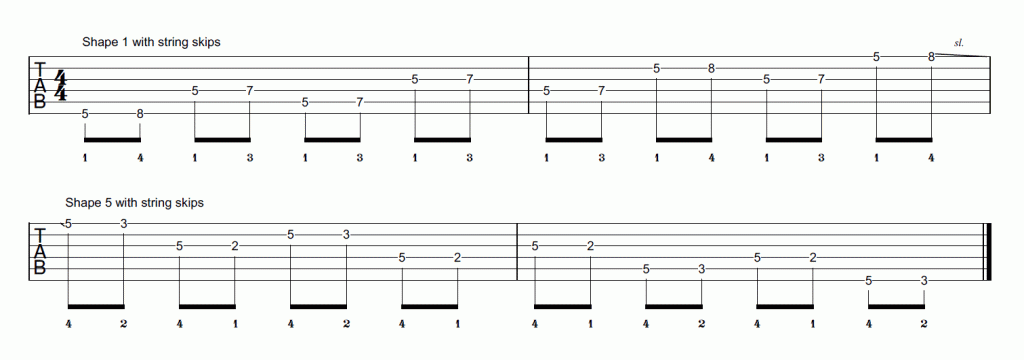
It is important to play these slowly and ensure you are consciously aware of each shape as you are playing it, rather than mindlessly shredding through each exercise. The idea here is to commit each shape to memory so we can build our mental framework of the fretboard.
I gradually devised more exercises encompassing the other shapes, until I was playing all across the neck and I now feel very comfortable with these shapes over the entire fretboard. I don’t know about you, but I really want to maximise my freedom of expression on the guitar and I hate feeling like my expression is being limited by a lack of technical knowledge or understanding.
By working on these simple techniques we build up our knowledge of the guitar fretboard, giving us the musical framework to express our creativity.
I am currently collating the entire collection of pentatonic exercises I devised into an eBook which will be available on Amazon soon, as I realised that other guitarists would really benefit from the same exercises that helped me.
 Impact Guitar